Motion Bashyal

Because I want a career in mechanical engineering, I chose Mathematics, Chemistry and Physics for my A levels. I am currently on a gap year which I am hoping will be an enriching year before I begin my Mechanical Engineering course in 2020.
I enjoy the arts, and I regularly paint, draw and animate. I have love film and media as well as music, and want someday to direct something of my own. I also like to push my body with sports and activities such as football, basketball, running, skateboarding and biking. I am always up for a challenge be it a game of chess or a game of hockey.
Motion Bashyal

Porridge and Rice combats poverty in the Nairobi slums, home to some of the poorest people in the world, by enabling pupils at partner schools to obtain a sound education.


Motion's Blog
Motion interests are diverse, ranging from art to bicycles about which he will blog in his gap year, before heading for university in September 2020.
Why Bad Chess is so Entertaining
26 June 2020
Recently I have found myself watching some of my favourite streamers fight each other in a battle of the mind. After GM Hikaru made a massive impression on the world of streaming entertainment, 'chess.com' decided to run a tournament, called Pogchamps, featuring many pro gamers and streamers with various chess grandmasters coaching each one. I never thought that when I compared the footage of Pogchamps to world title chess bouts, that I would prefer the Pogchamps footage.
Prestigious chess matches and tournaments are often recorded by the organisation running them for example, chess24 yet, their audio quality and video quality is terrible and the commentary is far too advanced for anyone new to the games to have a chance of enjoying. The only merit that these games have is the complex strategies and the short play times leading to intense gameplay, but even this can cause people to lose attention.
Pogchamps is simply an amateur tournament with commentary from the grandmasters who coach them and other streamers. It's hilarious to see the annoyance and frustration of the Grandmasters when the streamers make absurd blunders only for the other streamer to make another mistake atop the previous blunder. I think one thing that makes the tournament so charming is that you can see them being coached as that's streamed too so as a result, you see the payoff when they play and you get to see progress in real-time.
I think I appreciate the amateur level of play not only because I play chess as a leisure activity rather than a serious sport, so I want to see something I can understand and follow along with. The people are relatable and entertaining, but the moments they create as all these people of different skills gather is simply hilarious. One particular moment is when a 6 move checkmate left GM Hikaru and the whole stream speechless while the victor was screaming in joy.
Chess is a game to most so it makes sense for Pogchamps to be so entertaining when played by gamers. I do appreciate the high level thought that occurs in pro matches but it's only surface-level admiration because I have no idea what is happening and the commentary is not aimed at me, but Pogchamps is perfect for a chess beginner like me.


Yemen's Information Drought
19 June 2020
xxx
xxx


How GM Hikaru Changed Chess
12 June 2020
Chess has always been considered a sport for the intellectuals since, at higher levels, it requires strategic thinking. Becoming a 'Grandmaster' of chess is no easy feat because a large proportion of GMs began their career as a child prodigy and as a result, a lot of trainers will refuse to teach if you don't show potential. Chess has come under fire for its high level of elitism but, why is it that sports or games seem to carry varying levels of elitism, and why does chess have a noticeably higher one?
Elitism stems from the idea that the skills required to be competent or exceptionally talented are not accessible to everyone, and by assigning a large population of people to the have-nots it gives the skills more perceived value. Since the number of Chess Grandmasters is very low, compared to those who play the game, it makes it look like Grandmaster is an arduous title to achieve. I think the rigour stems more from the elitism than the game itself as even if you show talent you are likely to be rejected at higher levels and because of this reduces interest in the sport.
The reason the game of chess has recently come under fire for the elitism is that GM Hikaru Nakamura recently began streaming himself playing and explaining chess but this upset a large proportion of chess elites are not happy with this. GM Ben Finegold has been the most vocal about the pejorative reaction to what Hikaru has done. Hikaru has essentially brought thousands of new eyes to the higher level of chess and somehow this frustrates the chess community. Ben even says that the streamers he plays with are negative talents and have nothing constructive to do as if being able to play chess is a highly important skill to society. I believe that gatekeeping and elitism in chess is silly because chess is still a board game and World Champion Magnus Carlsen is not a military leader or strategist because of his chess skills, so to say chess is a superior skill to say playing games is nonsensical because chess is a game.
Hikaru is now one of the biggest names in Chess, and for good reason. He's charming and happily willing to admit that there's still a lot for him to learn, even if it's a game like Fortnite.
After finishing this blog I noticed that chess.com is now doing a tournament for twitch streamers and other entertainers called 'Pogchamps' with commentary from several Grandmasters and I am finding it very informative while also being a blast to watch.


Analysis of Norway
5 June 2020
An Analysis of Norway. When ranking countries, we don't usually consider happiness as a measure of success, but the quality of life speaks a lot about how much a country cares for its citizens. Countries like Norway are often named the " Happiest" countries in the world, and that's no accident. They are said to be very liberal and socialist societies where equal opportunity is valued. I want to believe that Norway is a utopia in plain sight, but it seems too good to be true.
Economist John Helliwell, states that individual or national wealth is not the biggest influence on happiness but, it's a union of social support, freedom, generosity, trust in institutions and GDP. He says that it's not plainly up to one factor but, the balance is the key to happiness.
Norway has a population of 5.368 million, and this equates to a population density of about 15 people per Km2. Comparing this density to the UK, (259 per Km2) it is drastically lower, and it shows that Norway is not having to deal with overpopulation. The absence of a housing crisis and the availability of land is a breath of fresh air, and this provides a breath of fresh air in a world seeming running out of space. Norway has built fast and reliable public transport while accommodating those who buy electric cars with multiple benefits.
A simple glance at how the citizens are taxed more than other countries, would suggest the people feel overwhelmed but, it's quite the contrary. The people are willing to pay because the government uses taxpayer money to invest back whether it be the transport system, free or very cheap education and economic support in times of need such as pregnancy. The niceties are noticed, and welcomed but, most importantly, it establishes confidence in the government.
Safety is also what makes Norway so charming, it has the lowest crime rate of the Nordic countries, with only 25 homicides in 2018 and all cases, the perpetrator knew the victim. Conventional thinking would suggest harsh policing but the police force is relatively small, and the prisons are world-renowned for their comfort. Norway values rehabilitation over punishment, and it surprisingly works.
Norway seems to be winning in all aspects, unfortunately even when it comes to drug overdoses. In 2015 Norway was second in cases of drug overdoses and a lot of forums are stating that their socialist nature is just on the surface layer. Selling of oil is for the Norwegians a skeleton in the closet and is often looked at as a lesser of two evils, as it allows their country with the resources they need but it taints the almost picturesque Norwegian society.
From what I have learnt, Norway is managing to make strides towards genuine equality but this doesn't come without struggles and problems. I believe that Norway is doing a lot of things right and I hope to visit and perhaps stay and find out for myself exactly what it is like.


How America Enables Police Brutality
29 May 2020
xxx
xxx


Food Vlog
22 May 2020
xxx
xxx


How The Internet Let Idiots Confide In Each Other
15 May 2020
xxx
xxx


The loneliness of the immigrant parent
8 May 2020
Growing up and being faced with immigrants as parents is difficult, for both me and my parents. I mean, growing up I would add Nepalese to my English sentences and vice versa, because I was learning both at the same time and my brain kept misfiring which put me in awkward situations and it's tragic because it meant I grew up with the idea that where I came from was awkward and something to hide in a dark corner way from all. Now, I'm ashamed but I like to think I was just scared of being the outcast, especially as a child being different can be frightening but it meant I was an outsider in my own home. I wish things were different, however what's important is where I show change and maturity.
I first noticed this problem when my brother began acting the same way and showing the same negligence, and seeing it come from him was frustrating. He would flat out refuse to go out if my mother wore a saree and at first I thought he was just showing traits of being a younger sibling but it got to a point where it would upset my mother, as a mummy's boy that's where I drew the line. I hated this idea of making my parents feel even more out of place and that their identity didn't belong.
This epiphany made me realise that what I always thought was my parent's only loving me on the basis of my success and behaviour, was what they knew about loving your children. All those years watching western families on TV showing each other grand shows of affection had given me a different definition of love to that of my parents. It made me overlook their hard work to make sure I had all the tools necessary to succeed for my happiness later on rather than purchasing a PS4 so that I could be happy until the novelty wore off.
I look to them now with a sadness, no longer because of how embarrassing they are or how unwilling they are to buy me anything I beg for, but because I truly understand how lonely they are. Through my actions alone I distanced myself from my parents and made them feel culprit to crime they did not commit, that of being a bad parent. Being a 1st generation immigrant is hellish for most and must have been for my parents but they make parenting look easy, which is a testament to their tenacity.


Shintoism
1 May 2020
When you ask Japanese people, they won't claim they are followers of Shinto, in fact in a census conducted on the Japanese people only 3% identified as Shinto. Only looking at the statistics will lead you to believe that Shintoism is a dying religion, but that would not explain why over 10 million people line up at Shinto shrines on the new year and why a lot more than 3% participate in local Shinto festivals.
First, an understanding of Shinto is important. Kami are the main focus of Shinto, there are two main interpretations of Kami and people can choose to believe one or even both. One belief sees everything having the quality of Kami as it is just a feature that anything can have for example Mt. Fuji while a physical entity is also Kami and the same goes for people and pets, but not everyone is happy with this explanation and some choose to believe another. The second belief states that Kami are entities that imbue something with qualities or reside within the object. With this there are little rules within the religion, there are only certain rules to follow in practice. For example, one must wash their hands and mouth before attempting to make an offering to the Kami as to not offend the Kami by being impure. Another example is bowing at the gates of the shrine as this shows you respect the place the Kami reside. Now with our bare bone understanding of Shintoism, I want to begin unravelling Shintoism in Japan
While not exclusive to the Japanese people, there is an expectation for everyone to be respectful and aware of others. It may be a stretch, but I think this has been ingrained into Japanese culture because of traditional Kami practices. For example, in the sacred spaces reserved for Kami (jinja) you're expected to clean yourself, be quiet and keep the space clean. It makes sense that even outside jinja these things are treated the same, because these practises are healthy for the community and promote unity.
Many of the strange festivals that still garner the attention of Japanese people become modernised to adapt to the changes in society. It's able to do this because the religion doesn't come with a guideline on what to believe for example, Kanamara Matsuri or more famously known as the "penis festival" is a ritual to celebrate and grant high fertility. With 3 people carrying giant steel phallus' there has recently been an alternative reason to celebrate the festival. It's now used as a pride festival too and openly accepts the sexual orientation of everyone because Shinto is just open to interpretation and is, in the world of burdening rules, a breath of fresh air.
How to define sport
24 April 2020
A lot of the sports we watch today are shows of physique and skill, but this was not always the case. Quite surprising to most, between 1912 and 1948 one could expect to see just as many iambic pentameters as 100 metres. This is because poetry was once an official Olympic sport, but why?
This question of why certain activities are appointed as sports while others are simple pastimes is one of heated debate, especially among chess, bridge and darts players who claim their activity should be a mainstay of Olympic entertainment. I personally do not wish to see this happen because, to be frank, no one would want to watch that, especially now that other "sports" are gaining larger crowds such as E-sports and Poker, both of which having fanbases claiming they are watching sports. Who do we even turn to when deciding what to call sports?
Well, a quick look at a dictionary will give you "an activity involving physical exertion and skill in which an individual or team competes against another or others for entertainment". If this is the standard, then why is figure skating any more of a sport than modern dance and why aren't the stunning acts of physical prowess displayed by ballerinas at the Olympics? It seems we face a categorising error and that is to say, sport is a cumbersome word to define and even more so to decide what belongs. A look into the history of the word sport shows that sport is shortened from the now archaic disport, which is to distract one's self from serious activities with recreational activities. The first recorded use of the word sport was used to describe the "sport of reading" and in fact sport was not considered with physical activities until the 18th- 19th century where it became synonymous with hunting, fishing and shooting. With all of this in mind it now seems like just about anything can be a sport, even the reading of poetry.
A solution to this issue could be to embrace the former definition of sport, which is a diversion from serious duties, and then create a system like that of animal classification. Having many different subdivisions and groups helps to avoid putting sports that are completely different within the same category and an organisation can also use this by specifying they will only use certain subdivisions of sports to broadcast.


Wealth Gap in Parasite
17 April 2020
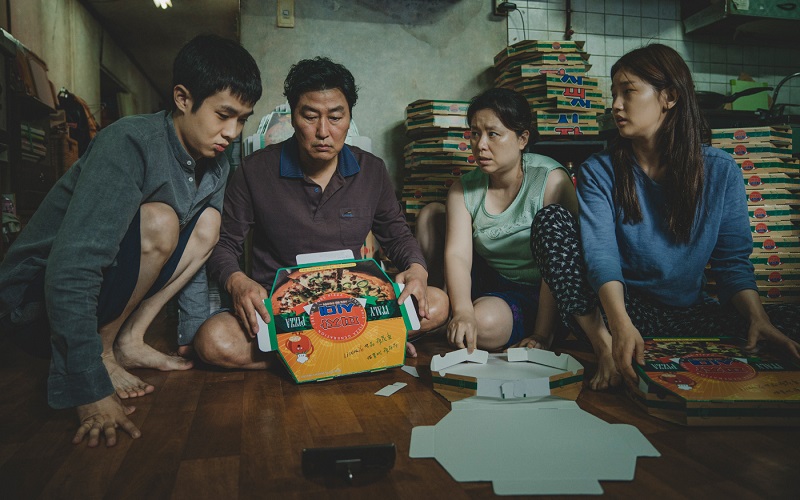
Bong Joon-ho's compelling movie "Parasite" focuses on two different families in Seoul in an effort to criticize the effect of a growing wealth gap in South Korea. These families and the setting of Seoul are essential in delivering his message, but I wanted to know if the world of Parasite was an accurate depiction of South Korea.
Differences in height is one tool Joon-ho uses to suggest division between the Parks and Kims. The two families inhabit two very different styles of housing, the Kims in the very cheap semi-underground "banjiha" apartments and the Parks live in a modern house among the hills. I found depiction of banjiha in the movie was completely accurate. The underground apartments are a result of a fear of North Korea attacking and are repurposed bunkers to avoid a housing crisis. These apartments are very cheap and are supposed to be a means to save money, especially for the younger generation, with this information I see just how difficult the Kims position really is. It is troubling that even with the cheapest housing it is still not enough for the director's depiction of an average South Korean household. The Parks cannot sustain the lifestyle they live, they need help from the Kims and have a larger impact on the environment. Oxfam states "the richest 10% are responsible for around 50% of carbon emissions" so Joon-ho's depiction of the indulgent is quite realistic.
The director uses a flash flood to destroy the banjiha and leave the viewer with a realisation that although the Kims are gradually becoming wealthier, they cannot and will not reach the Parks. The delivery of the director's message is harrowing, and events like this happen far too often in Seoul. In late July of 2011 torrential downpour left Seoul devastated, 69 people were killed and 8 still missing, and I think this is what Bong Joon-ho wants to depict because in this tragic event a large proportion of victims were the poorer families and residents like the Kims. A look at the topography of Seoul shows that rainfall in the surrounding areas will eventually lead to the city centre because Seoul is essentially a basin and the design of streets implemented by the mayor only adds to the destructive capability of the floods. The Kims constantly moan about the rain having cancelled their plans while they have the Kims do all the work to organise a new event after the flooding. The movie reflects how the poor fall victim to a world they inhabit designed by and for those literally above them and it is the moment that the Kims run to their home during the downpour, beknowing of their fate, that shows how aware Parasite is of its context.
Parasite also comments on the rapidly changing social climate of South Korea. The country is facing westernization and the Parks embody this as shown by their constant bragging of American made products and hiring the daughter of the Kims because they believe she studied in Illinois. Their admiration for the west mimics South Korea's attempt to distance themselves from North Korea, this has also translated into the culture shifting and taking things such as beauty standards and fashion with it too. With paler skin and bigger eyes being what is desired the poor are finding themselves alienated. The Kims represent the people who are being forgotten in South Korea's time of change, Mr Kim is the furthest from these standards and the Parks make sly comments about his appearance and smell, and I believe this is accurate as South Koreans face immense pressure to align to these norms which has led to a sharp increase in surgeries and alterations.
Parasite is deserving of its praise; its commentary is well justified and is accurate to the context of not just South Korea. Having not previously known that South Korea was dealing with a growing wealth divide, I believe that the movie executes its message down to the finer details.

China's wet markets
10 April 2020
China reported a problem on Christmas Eve of 2019, cases of a new strain of virus were rapidly growing and China could no longer hide it. The new coronavirus dubbed COVID-19, spread across the world at an unprecedented rate leaving many countries with a monumental problem. While the virus itself is a product of nature, I believe the circumstances that allowed the virus to become the threat it is, is entirely man made.
China believes COVID-19 came from a wet market in the Wuhan province, where it is theorised to have spread from a bat to pangolin and then to human. In the wild this is almost never going to happen as the virus must move through two hosts before reaching a human, but the conditions of the wet market gave ample opportunity for this to happen. Wet markets are a huge industry in China, that was originally created to feed the starving population of China by any means necessary and this meant eating whatever could be caught. Once the state had seen how successful this was in feeding the population, it was endorsed because if a person was able to feed themselves it greatly benefitted the state. After the practice became endorsed, anyone involved was protected by the government, more and more animals came flooding in. Animals which would have never encountered each other, let alone humans are now stacked on top of one another and swimming in each other's excrement, this is how new deadly viruses breed and fester.
Wet markets exist all over the world, but what makes China's wet market the hub for deadly viruses is the sheer number of wild and undomesticated animals. When an animal is domesticated all potential viruses that the animal can share with humans has already been done and leaves the workers and everyone else with immunity, China's wet markets couldn't be further from this.
The animals being stacked atop one another is not the issue or even that they are near each other, it is the exposure to people and their consumption of wild animals that caused COVID-19 it is not common for a person to encounter a bat that closely in the wild. For the same reason bushmen exposed to chimpanzee blood contracted HIV which is common in chimpanzee but doesn't affect them. Exposure is causing viruses, that would never of found a human host, to begin spreading around the Chinese population and eventually the rest of the world.
I believe that China has recognized the difficult decision they face. The world looms over China to make the right decision and the powerful heads of the wild animal farming trying to influence them with large sums of money. I am concerned that it is too easy for China to simply turn a blind eye and take no action, but I think drastic measures such as banning wet markets are not needed but instead having fewer species of wild animals coming to China and try and impose strict standards on the hygiene of the markets but also the customers. This should drastically reduce the risk of a lethal virus such as COVID-19 being able to spread or even become lethal and will also be a solution that both parties will be somewhat happy with.


Are Electric Cars Green?
3 April 2020
Electric cars have made a huge impression on the motoring industry and the media, as every company seems to want to produce their own electric car. The idea that these cars provide a greener way to travel seems to have everyone lining up to buy one, but electric cars may not be as sustainable as people assume.
The electric engine does not require fuel in the same way combustion engines do but instead needs charging and this leads to the first set of pros and cons. The electric car with its electric engine does not directly produce carbon gases or nitrogen dioxide which are hugely detrimental to the environment and the Earth's ozone layer. The charging of the electric car at a charging station is incredibly slow as it can only provide up to 7kW of power meaning it can take more than 5 hours to fully charge a 40kWh which is on the smaller side, and the availability of charging stations leaves the consumer with very limited options. Another downside to the engine is that the range is much lower than the competition meaning long distance travel must be planned with locations of charging stations planned, but the issue at hand is not to with the practicality of the car.
When considering carbon emissions, it is not true that the electric car is emission free or even carbon neutral because the production of each car, its battery, the refueling and its eventual disposal will all produce huge quantities of greenhouse gases. To understand the real cost to the environment, I began by looking at production cost of traditional cars and the average production emitted 5.9 tonnes of CO2 and it is generally understood that on average the emissions for producing an electric car are higher and estimates put it around 20-70% higher than standard cars (about 2-17 metric tonnes of CO2) and this is primarily because of the massive battery, but this varies with the size of the engine a small engine (30kWh) will produce 1-5 tonnes whereas a large (100kWh) battery will produce 6-17.5 tonnes baring this in mind it is possible for the smaller engine to be better to produce but this varies with the make of car. However, once you consider the lithium required for the battery being extremely toxic and causing massive environmental damage such as water, soil and air pollution which drastically effects whole communities, this clearly leaves the combustion engine as the environmentally friendlier option.
Now when looking at annual production of CO2 we see this is documented very well for traditional cars as it is heavily monitored by the Alternative Fuels Data Centre (AFDC). The average driver in USA drives 12000 miles (an average of 33 miles a day which is well within the capabilities of modern electric cars) with 5.1 tonnes produced. When it comes to electric cars this is documented in the US as well but the source of energy will change the average output for example, a state like West Virginia which is heavily dependent on coal will produce more than a state such as Idaho which is heavily hydroelectric dependent will produce a lot less. The AFDC puts the national average CO2 emissions for full electric cars at 1.83 tonnes and because the electric car on average electric cars produce less emissions than we could assume that the CO2 emissions of combustion cars given time will exceed that of electric cars. However, the time taken for this to happen will vary from place to place depending on how the energy is sourced for example in Idaho it will only take 5.9 years for a large electric car to offset its production emissions only because they rely on hydroelectricity which is carbon neutral, but in West Virginia it would take 17.2 years which is completely unreasonable and would mean that there is no benefit to the environment and in fact is worse than a combustion car.
It is difficult to say whether it is environmentally a good decision to buy and use an electric car, as the answer heavily relies on the source of energy that powers the car. If the source of energy for the car is clean there are still other factors such as does the method of green energy have other side effects. For example, in the case of hydroelectricity the dams required to power the motor destroy habitats and affect the surrounding landscapes Also how is the green energy being funded? In Sweden's case, their clean energy scheme to incentivize the population to buy electric cars by providing owners of electric cars free education for kids and other such benefits is completely funded by selling their fossil fuels to other countries essential just shifting the carbon emissions elsewhere, leaving Sweden with among the top smallest carbon footprints. The lithium ion batteries often used by Tesla and now more companies create a daunting problem which is how should be dispose of these poisonous batteries once people eventually grow old of their current model and want an upgrade?
I believe electric cars are ahead of their time. Without clean energy there is essential no use for the electric car because the situations where electric cars are viable options are just too small and the demand is too high due to the positive media influence. Due to this, electric cars are turning out to be a much more lethal method of emitting carbon into the atmosphere, simply because we lack truly guilt free clean energy around the world.


Akira
11 October 2019
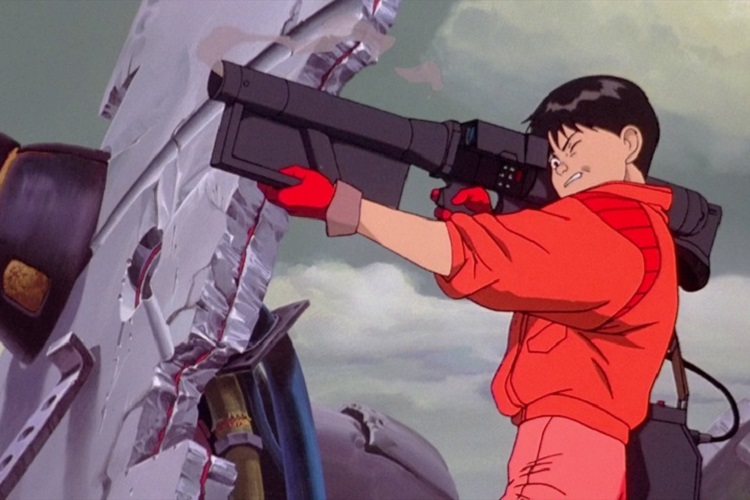
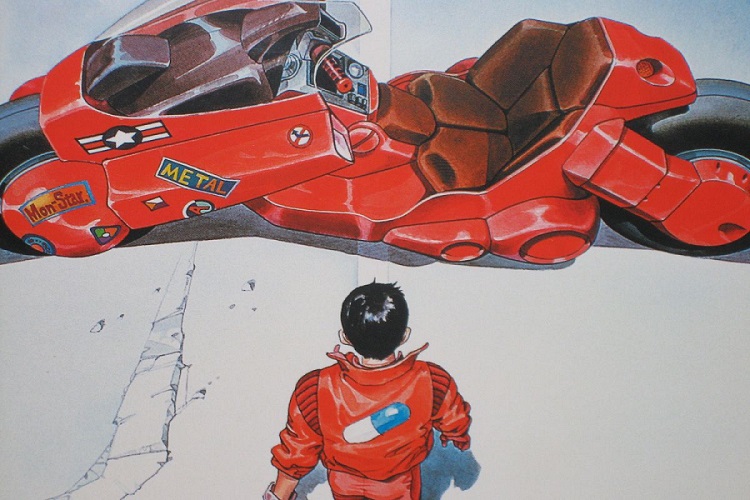
Akira is a 1988 Japanese animated post-apocalyptic cyberpunk film set in a dystopian 2019. It tells the story of Shōtarō Kaneda, a leader of a local biker gang whose childhood friend, Tetsuo Shima, acquires incredible telekinetic abilities after a motorcycle accident, eventually threatening an entire military complex amidst chaos and rebellion in the sprawling futuristic metropolis of Neo-Tokyo. While most of the character designs and settings were adapted from the manga, the plot veers away from the countless side characters, slow pace and second half. In doing so the product is a lot more stylized and was unintentionally more suited for western audiences who revelled in the sight of the amazing design of scenery and heart-warming characters.
Having seen the film many times, I believe that it has many special qualities even with its flaws. By far its greatest quality is the unfathomable attention to detail. Akira's world building is phenomenal with the obsession with detail - every scene is overwhelming just like Neo-Tokyo which allows the viewer to believe it is a city in chaos and that the characters are real. I appreciated the stylistic choices; the bright red coat and Kaneda's bicycle feels like a perfect reflection of his boyish charms and witty attitude. This must have been a huge decision with the manga in black and white, and key to its mainstream success. There are several factors that led to the exceptional quality of Akira such as the decision to use 24 frames per second. Many animators animate only on "twos" which means that they repeat drawings to decrease the frame rate to 12 leading to flat animation with a similar pace and no weight in action scenes. However, the animation of Akira uses ones and twos, resulting in smooth and perfectly paced story-telling with 24 frames per second. There was also the option to use computers to render between frames to reduce man hours, however the director Katsuhiro Otomo requested that they took the laborious route and while the differences are not entirely noticeable, the craft and passion put into this project has inspired many anime, other media and people one of whom being Kanye West, who claims Akira inspired many of his creative decisions such as the set design and action in the music video of "Stronger".
Akira has a lot to say about Japanese post war anxieties and how the country changed after World War II. The opening scene shows a giant explosion of light that destroys Tokyo mirroring the destruction of Hiroshima and Nagasaki and shows similar power struggles between religious zealots, corrupt capitalists and violent, troubled youths. The character Tetsuo is a personification of the post war struggles. His psychic powers and mutations are parallels to the deformations that Japan witnessed due to radiation poisoning and his rapid change from powerless to omnipotence over a short period of time is reminiscent of how Japan went from being a country in shambles to becoming an economic power house by the 1980s. The ending suggest that Tetsuo is taken to a parallel universe to be safe and start over and this to me is what Japan wanted, to create a future free from the burdens of the past and since the final battle takes place in the Olympic stadium, which is later destroyed, I believe that it is a symbol of Japan's sour feelings towards the western world at the time. The character of Kaneda is a reflection of the youth of the time, often disobedient and ill mannered due to Japan's rise needing a larger work force which left children often unsupervised just as they are in the movie. However, Tetsuo juxtaposes this and is well mannered and soft but is often treated poorly and is regularly the butt of each joke. I believe this represents Japan's loss of pride, and the country's growing shame over the mistakes during the war. The rise of Tetsuo mirrors the rise of Japan, and I believe that the ending shows Japan's concerns about repeating past mistakes and again becoming a country in shambles as shown by Tetsuo's defeat and the destruction of Neo-Tokyo.
Akira broke boundaries and set standards for future anime, in particular reaching new audiences and popularising the art-form making it viable to produce more films. Akira turned me into an anime fan.
Black Holes
4 October 2019
Theorizing and Proving the Black Hole
The idea of a body so massive that even light could not escape was briefly proposed by astronomical pioneer and English clergyman John Michell in a letter
published in November 1784. Michell's simplistic calculations assumed that such a body might have the same density as the Sun, and concluded that such a
body would form when a star's diameter exceeds the Sun's by a factor of 500, and the surface escape velocity exceeds the usual speed of light. Michell
correctly noted that such supermassive but non-radiating bodies might be detectable through their gravitational effects on nearby visible bodies.
In 1915, Albert Einstein developed his theory of general relativity, having earlier shown that gravity does influence light's motion. A few months later,
Karl Schwarzschild found a solution to the Einstein field equations, which describes the gravitational field of a point mass and a spherical mass A
few months after Schwarzschild, Johannes Droste, a student of Hendrik Lorentz, gave the same solution and wrote more extensively about its properties.
This solution had a peculiar behavior at what is now called the Schwarzschild radius, where it became singular, meaning that some of the terms in the
Einstein equations became infinite. The nature of this surface was not quite understood at the time.
The Beast is Born
It is believed that a black hole is formed when a star exceeds the Chandrasekhar limit, which is the maximum mass that a star can have and form a white
dwarf after a supernova anything larger either becomes a neutron star or black hole, this limit is 1.44 solar masses. A star of has two main forces acting
in the main sequence and that is Gravity and Radiation Pressure these two forces are equal and opposite for the most part. Enough hydrogen is fused into
helium to counteract the collapse of the star under its own weight. However, once the hydrogen in the core is low/depleted the star begins to collapse.
As a result, pressure and then temperature increase due to the decrease in volume, this provides more energy for the star to fuse again but this time helium
is the fuel, and this causes the stars radius to increase and then shrink when depleted and this is repeated causing layers of elements in the core and
this occurs until Iron is formed. Once Iron is formed no more fusion can occur and the weight begins to cause the star to collapse for the final time,
since the star is above the 1.44 solar masses a supernova occurs and leads to two outcomes; either a neutron star, a celestial body of a very small radius
and very high density composed of predominantly neutrons or a black hole, a point of infinite mass surrounded by a strange region called the event horizon
which once crossed is the ultimate point of no return as not even light can escape its grasp as it has an escape velocity greater than the speed of light,
3x10⁸ms-1.
Black Holes and Figure Skaters
Similar to a figure skater when spinning they will pull their arms and legs closer to their center of mass to achieve a higher angular velocity, the
same occurs when a star is collapsing into a black hole this is because angular momentum must be conserved and as the radius decreases the velocity will
increase to compensate and in the case of the black home rotates immensely fast. We know this to be true when A.S.A.S.S.N, a space telescope looking for
supernovae discovered a signal that repeated at regular intervals of 131 seconds over the course of 450 days, this phenomenon was not from a supernova
but from a spinning black hole feeding on a star which is quite rare. This event left an accretion disc (a rotating ring of scattered matter) around
the black hole and the high velocity caused tremendous frictional forces which heated the matter and caused it to emit UV, Visible and X-rays which is
what the telescope picked up. These events are called Tidal Disruption Events/Flares because as the star approaches the black hole one side experiences
differences in gravitational pull like the earth and the moon but on a much larger scale, the tidal forces are so great that they tear the sun apart.
Perhaps the most interesting aspect of the spinning black hole is the Ergosphere, this is caused by the fact a singularity cannot spin so the point of
infinite mass is instead a ring, a ringularity, this causes spinning ring of infinite mass has strange effects on space-time. The spinning of the ringularity
causes space-time to drag with it and create a new region of space called an Ergosphere which surrounds and envelopes the black hole and event horizon.
The Ergosphere only partially distorts time and space unlike the past event horizon where time no longer functions and unlike the event horizon passing
into the ergosphere does not necessarily consume you. An analogy can be used to understand the difference the event horizon is like a very steep slide,
there is only one way to go, but the ergosphere is like the whirlpool around the drain in a sink, entering the ergosphere causes you to gain immense
rotational energy. This idea of gaining energy by entering the ergosphere lead to the 'Penrose Process' which is the first and easiest method of voiding
energy from the void.
Stealing from the Beast
As we now know the ergosphere when entered provides a large amount of rotational energy due to the 'dragging' of space-time from the ringularity.
This idea spawned the Penrose Process where a rocket enters the region and to escape it releases some mass, so chemical energy in the mass is converted
to much more kinetic energy than if rocket fuel were to be combusted by itself. This method can primarily be used to boost kinetic energy and would be
harder to convert to electrical energy, an advanced civilization could harvest asteroids to exchange for a huge kinetic boost for something like interstellar
travel which with the technology we currently have would be nigh impossible.
The Universal Weapon of Mass Destruction
An even more efficient method of siphoning the rotational energy of the black hole was imagined, Superradiant Scattering. To understand this, we must
understand that even light gains energy in the ergosphere not as kinetic energy but in the form of a higher frequency this means that if we were to encase
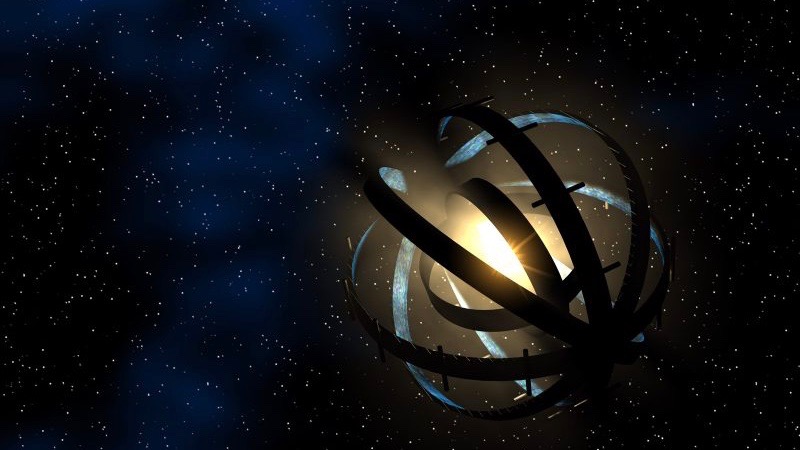
the black hole in mirrors like a Dyson Sphere but much better because black holes are so compact relative to stars meaning that harvesting materials
for the mirrors will not be such an arduous task. Once the black hole is completely encased an opening can be made into which we fire a burst of EM waves
some of it is lost past the event horizon some will pass through the ergosphere and it will gain energy and reflect on a mirror to enter again and gain
even more energy occurring over and over, this is called Superradiant Scattering, some mirrors can be opened to siphon the energy which would be much
more than we had put in, this in turn slightly slows down the black holes rotational speed but is practically negligible. The reason this method is called
a W.M.D on the grandest scale is because if left unchecked and un-siphoned, the energy will build up to catastrophic levels. A supermassive black hole
would release as much energy as a supernova meaning that this would be the most destructive weapon man-kind could ever hope to create.
A Hole to call Home
The last civilizations in the Universe long after stars, white dwarfs, neutron stars and red dwarfs will be based around black holes due to their immense
lifetime estimated to be in the trillions of years due to Hawking Radiation, a very slow form of decay that occurs on the borders of black holes slowly
reducing the radius, being their only weakness. The almost unfathomable power of a black hole may be used to fuel day to day life until the death of
the universe because these theories are not just science fiction, but very applicable once technology has caught up to such ridiculous ideas.




Why Bad Chess is so Entertaining
Yemen's Information Drought
How GM Hikaru Changed Chess
Analysis of Norway
How America Enables Police Brutality
Food Vlog
How The Internet Let Idiots Confide In Each Other
The loneliness of the immigrant parent
Shintoism
How to define a sport
Wealth Gap in Parasite
China's wet markets
Electric Cars
Akira
Black Holes
